Heritage & Design
JAGUAR XJ
X351 · THE FINAL GENERATION
Eight generations of XJ culminated in a flagship that deliberately moved Jaguar forward.
Back home←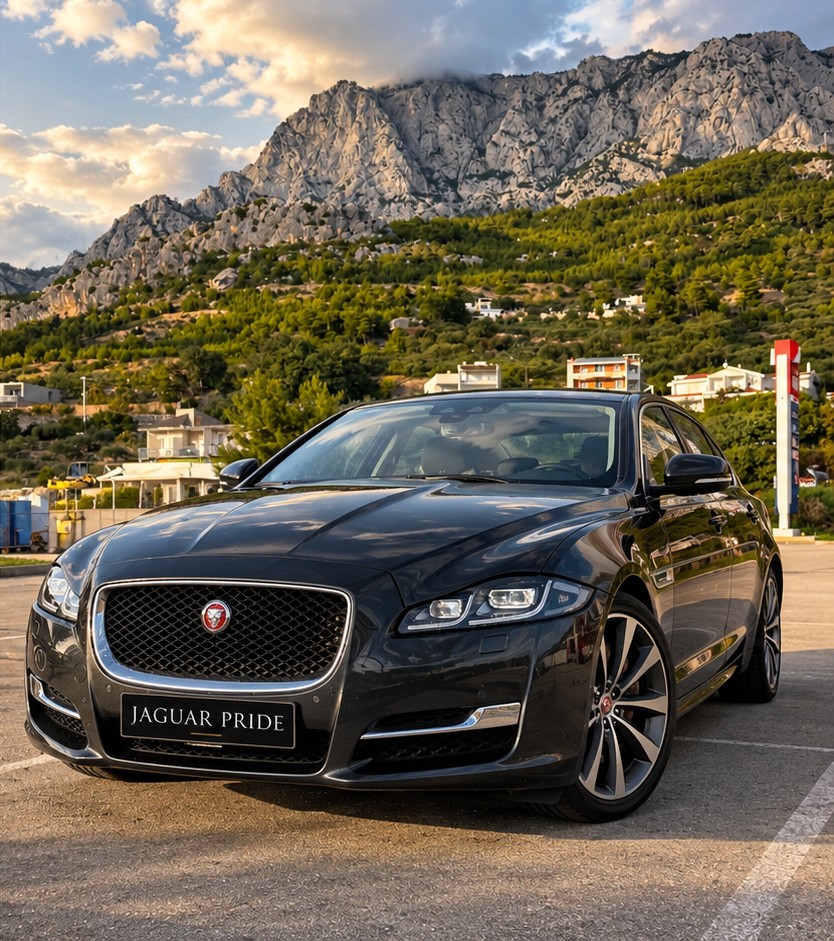
Eight generations of XJ culminated in a flagship that deliberately moved Jaguar forward.
Back home←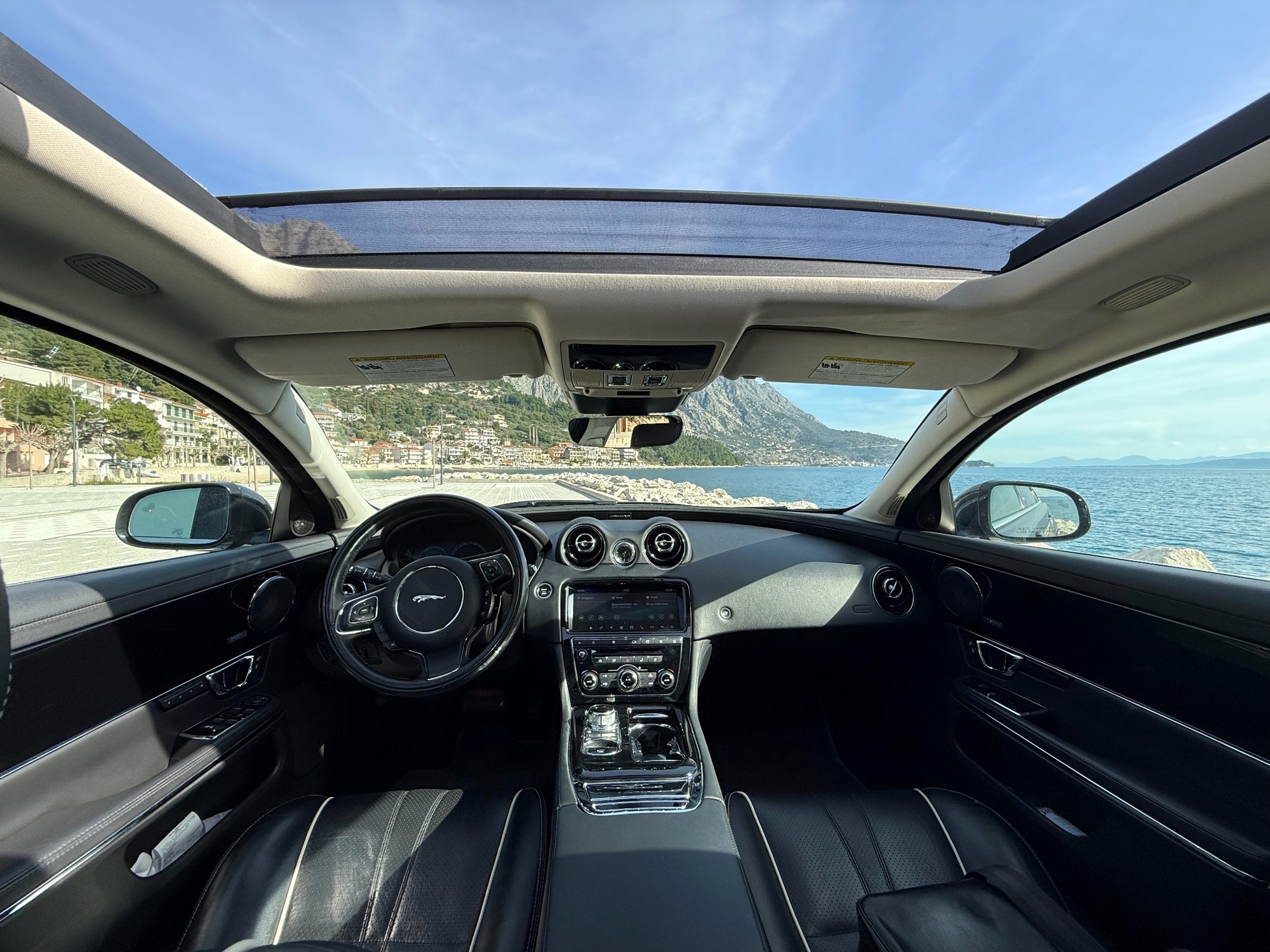
The X351 cabin combines traditional Jaguar luxury with a much more contemporary architecture. In this car, dark leather, the sweeping dashboard and bright metallic detailing create a cockpit that feels both formal and sporting.
The panoramic glass roof dramatically changes the atmosphere inside, while the centre console is dominated by one of the defining details of modern Jaguars: the rotary JaguarDrive Selector. It rises into position when the car is started, turning an everyday control into a small piece of theatre.
From the driver's seat, the XJ feels unusually intimate for a large luxury saloon. The dashboard wraps around the occupants rather than presenting a conventional upright fascia — one of the details that distinguishes the final XJ from its predecessors.
The X351 was unveiled in London in July 2009 and launched for 2010 as the eighth generation of Jaguar's flagship saloon. It was the first XJ to fully embrace the modern design language established under Design Director Ian Callum.
Rather than recreate earlier XJs, the X351 used a sweeping roofline, assertive grille and distinctive blacked-out rear pillars to create a contemporary flagship.
Jaguar's aerospace-inspired body architecture was constructed primarily from aluminium, with magnesium and composite alloys also used. At launch Jaguar claimed the car was around 150 kg lighter than competitors in its class.
The 3.0-litre supercharged V6 joined the range in 2012. In 2018 Jaguar marked fifty years since the original 1968 XJ6; X351 production ended on 5 July 2019 after more than 120,000 cars had been built.